Key planning information for cleft palate repair surgery in Spain.
2–3 hrsProcedure time
2–3 daysHospital stay
5 hospitalsList cleft palate repair surgery
Cleft Palate Repair Surgery in Spain is priced per case at 5 hospitals. The operation takes 2 to 3 hours, with 2 to 3 days in hospital. Each hospital quotes its own price for your case.
Hospitals and clinics offering Cleft Palate Repair Surgery in Spain
Cleft Palate Repair Surgery is listed by 5 hospitals in Spain. The order reshuffles every hour so each gets equal exposure.
HM Hospitales is a hospital group with six private hospitals in Madrid: three general hospitals, a cardiovascular hospital, an oncological center and a women's health hospital.
A modern (opened in 2007), general, private hospital located in Madrid, part of the NISA group of hospitals. The international patients department can assist patients with accomodation and trasportation, and can communicate in English as well as in Spanish.
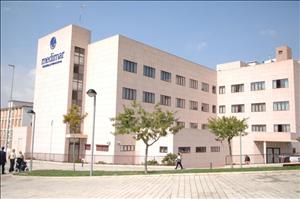
Medimar International Hospital is a tetriatry care hospital with 200 physicians, 50 resident and 150 affiliated, providing healthcare services to the residents of Alicante, as well as to over 25,000 foreign patients a year.
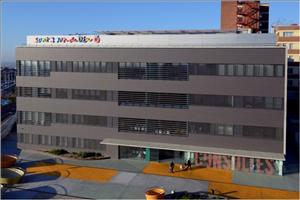
Sant Joan de Déu-Barcelona Children’s Hospital is one of the leading medical centers in Europe for childhood and adolescence medicine and offers a comprehensive and multidisciplinary approach to health care from birth through 21 years of age.
An ISO certified modern private hospital, which was opened in 2006, and is part of the Quirón Hospital Group. This tertiary care hospital 400 has certified physicians from all medical specialties capable of treating the most complicated medical cases.
Cleft Palate repair surgery (Palatoplasty)
Cleft palate is repaired by a surgical procedure to reconstruct or repair the palate of the patient. Palatoplasty is a common cleft palate repair procedure that is performed to seal the abnormal cavity between the mouth and the nose. It helps the patient in attaining normal speech. Moreover, it aids the patient to breathe and swallow, and helps in the normal development of the mouth structures.
At was age is it recommended to undergo surgery?
Cleft palate is repaired when the child is six to 12 months old.
Repeated and combined surgical procedures are often required when the child grows.
How is Cleft Palate repair surgery performed?
The patient is given medications and fluids through an intravenous line.
The cleft palate is repaired by attaching tissue on both sides of the cleft.
The opening to the nose is sealed and muscles are also attached that aids in lifting the palate.
Several layers are added to reconstruct the palate.
How to prepare for Cleft Palate repair surgery?
The child undergoes a complete physical examination.
The child’s blood is tested and the medical history is recorded.
The doctor should be informed about any medication that the child is taking. This includes vitamins and supplements.
Certain medication that the child is taking may be stopped some days before the surgery.
The doctor should be informed if the child has other illnesses and abnormalities.
The pediatrician will monitor the child’s nutrition and weight. The child needs to gain a certain amount of weight for the surgery. If this is not attained by oral feeding, the child may be fed using a nasogastric tube.
Approximately three weeks prior to the surgery, the child’s diet should consist of food that is of a thicker consistency.
As cleft palate can cause ear problems, the doctor may recommend the use of Tympanostomy tubes during the surgery.
About Cleft Palate Repair Surgery
Key facts to plan your treatment: how long it takes, your hospital stay, anaesthesia, risks and recovery.
Duration of surgery/treatment
2 to 3 hours
Days admitted
2 to 3 days
Anesthesia
General anesthesia
Recovery
- The child’s pulse oximetry is monitored for more than 24 hours. - A liquid diet is given to the child for two to three days. - If a liquid diet cannot be given, the child is given hydration intravenously. - Sometimes pharyngoplasty and other speech therapies are needed to repair speech. - The requirement of additional surgeries is determined only after the child is four to five years old, when the speech development is almost complete.
Risks
- Bleeding - Airway obstruction - Development of a fistula between the mouth and nose - Dehiscence of the palate - Scarring - Tissue loss - Hypernasal speech
After care
- The child’s mouth should be rinsed with water after the child is fed. - A regular nipple should be avoided for three to four weeks. - Solid food should be soft. - A follow-up appointment should be scheduled after a week or 10 days from the date of discharge. - Arm restraints may need to be placed if recommended by the surgeon. - Rough play or activity should be avoided for some period. - The child should not be exposed to other sick children to avoid infection.
The doctor should be informed if there is - Bleeding from the mouth - Swelling of face - Pain that is not reduced by medication - Fever that is higher than 101.5 degrees F

 Hospital Group
 ISOPrice on request