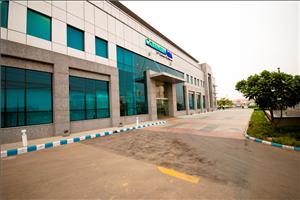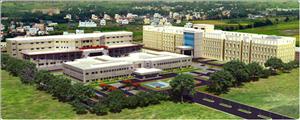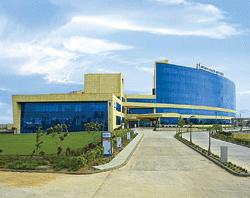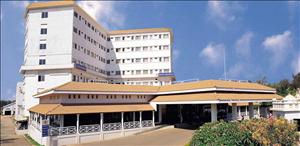

Fortis Flt. Lt. Rajan Dhall Hospital is a Centre of Excellence for Cardiac Sciences, Renal Sciences, Diabetology, Pulmonology and Thoracic Sciences and a specialty center for Joint Replacement, Genito-urinary, Cosmetic Surgery and Dental care.
At a glance
Key planning information for spinal fusion in India.
Spinal Fusion in India is listed from US$5,500 to US$8,000 at 14 hospitals. The operation takes 4 hours, with 4 to 6 days in hospital. Each hospital quotes its own price for your case.
Cost of Spinal Fusion in India
Table of prices by type of procedure, in US$. Each hospital quotes its own price for your case.
| Procedure | Minimum price | Maximum price |
|---|---|---|
| Spinal Fusion | $5,500 | $8,000 |
Hospitals and clinics offering Spinal Fusion in India
Spinal Fusion is listed by 14 hospitals in India. The order reshuffles every hour so each gets equal exposure.
Private HospitalA 200-bed facility located at Gateway Center in Northwest Bangalore. The hospital opened in 2008 and provides comprehensive tertiary-level services, such as cardiac operations, orthopedics and neuroscience, as well as secondary-level medical care.
Private HospitalA modern 100 bed hospital opened in 2008, located in Gurgaon, outside of New Delhi.The hospital is a part of the Columbia Asia Group, which has an international patients office able to assist foreign patients with all aspects of medical travel.
Private HospitalThe flagship hospital of the Global Hospitals Group, which operates eight hospitals throughout India. The modern 500 bed hospital was opened in 2009, and offers advanced medical and surgical treatment, including organ transplantation, cardiac surgey and neurosurgy.
HospitalThe flagship hospital of the Artemis Health Sciences offers caters to local and international patients alike. It is the first 300-bed multi-specialty hospital in India to function with a paperless information management scheme.
Located near Delhi, Fortis Hospital Noida is a Centre of Excellence for Orthopaedics and Neurosciences with a focus on Cardiac Sciences, Minimally Invasive Surgeries and Oncology.
A JCI accredited hospital, and one of the region’s leading multi-speciality hospitals, with a super-speciality in Heart.
Private HospitalA conglomeration of hospitals in one campus, including: the Sparsh Hospital for Orthopedics & Trauma, the Mazumdar Shaw Cancer Center, the Narayana Hrudayalaya Heart Hospital, the Narayana Nethralaya Eye Hospital, as well as a full fledged multi specialty hospital.
Private HospitalApollo Bangalore is a modern, JCI accredited, multi-specialty hospital, capable of treating the most complex medical cases, including neurosurgy, bone marrow transplants, oncology and cardiac surgery. Apollo provides a full range of services for foreign patients.
Private HospitalThe Apollo Hospital Chennai is part of the Apollo Hospitals group. The hospital is JCI accredited and considered as one of the best hospitals in India.
Description of Spinal Fusion:
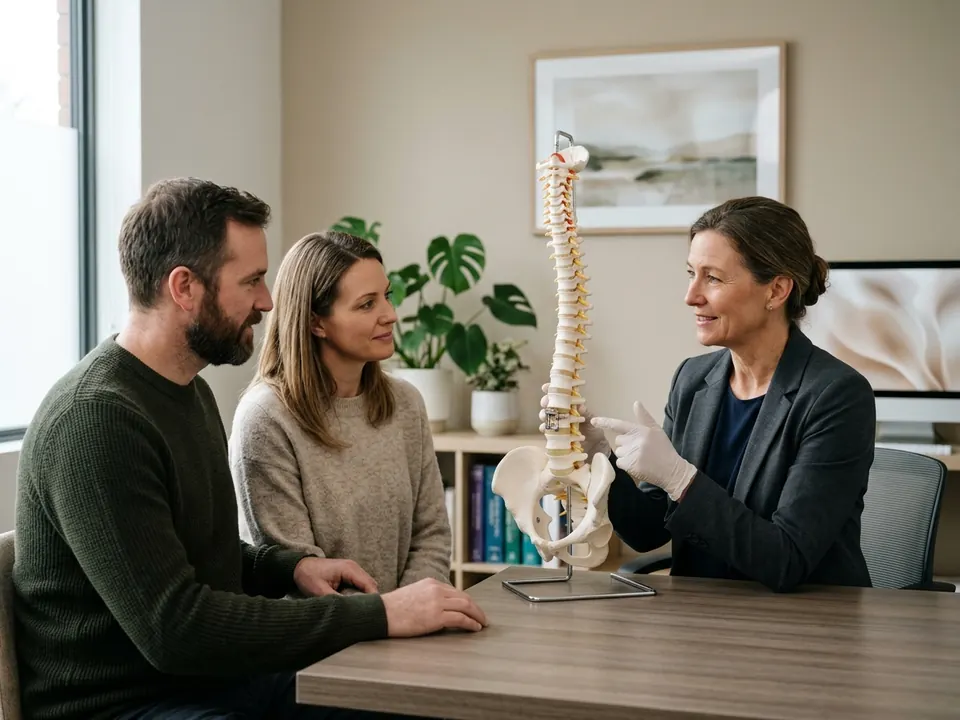
Spinal Fusion is a surgical procedure to fix two vertebrae together. This permanently fuses two bones together and as a result there is no movement between these bones. Other surgical procedures such as laminectomy are usually done prior to a spinal fusion. A graft is used to join the bones permanently together. If the graft is taken from another body part, commonly from the pelvic bone, it is called an autograft. The graft may also be taken from a bone bank known as allograft. In rare cases, synthetic bone substitutes may also be used. Screws, plates or cages are used to join the vertebrae together so that the bones do not move when they are healing.
The different types of spinal fusion may be used in combination with one another. They are:
- Posterolateral Fusion
In this procedure the bone grafts are placed between the transverse processes of the spine. The vertebrae are joined with the help of screws and wires through the pedicles of the vertebra, which is attached to a metallic rod on the sides of the vertebrae. - Interbody Fusion
In this procedure the bone grafts are placed between the vertebra. There are three types of interbody fusion:- Anterior Lumbar Interbody Fusion (ALIF), in which the surgery is performed through an anterior abdominal incision.
- Posterior Lumbar Interbody Fusion (PLIF), in which the surgery is performed through a posterior incision
- Transforaminal Lumber Interbody Fusion (TLIF) in which the surgery is performed through a posterior incision on one side of the spine.
How is Spinal Fusion Performed?
During spinal fusion, the vertebrae are exposed through an incision. Tissue layers above the bone are put aside. Small parts of bone are then placed beside the vertebrae. A spinal fusion using an autograft is more successful than a spinal fusion performed with an allograft. However, an autograft may cause more stress on the surgery and blood loss.
Spinal instrumentation may also be received by some patients. Rods, wires and screws are attached to the spine. This is used to keep the vertebrae in place during the fusion. Alternatively, an external brace may be applied after the spinal fusion surgery.
Once the surgery is complete, a drainage tube is placed out of the incision area to drain out fluid for some days.
How to Prepare for Spinal Fusion?
- The patient should inform the doctor about any medical conditions and ailments.
- The doctor should be informed about any medication that the patient is taking.
- Certain medication that the patient is taking may be stopped by the doctor a couple of weeks before the surgery.
- The patient should stop smoking a couple of weeks before the surgery to enable a quick recovery.
- The doctor should be informed if the patient has been consuming alcohol.
About Spinal Fusion
Key facts to plan your treatment: how long it takes, your hospital stay, anaesthesia, risks and recovery.
- Pain medication may be given in the form of pills or intravenous injections.
- The patient is taught how to move, sit, stand and walk in a proper without causing harm to the spine.
- The patient may need to be fed though an intravenous tube for 2 to 3 days.
- The patient may need to wear braces after the surgery.
- After the surgery, the patient may recover entirely or partially.
- Spine problems in future are possible for any patient after a spinal surgery.
- Infection in the vertebrae
- Injury to the spinal nerve that can cause bladder and/or bowel incontinence, pain, weakness, loss of sensation, etc
- Blood clotting
- Adverse reaction to medication and anesthesia
- Bleeding
- Breathing difficulty
- Stroke
- After a spinal fusion, the spinal column may be stressed.
- Normal activities should be avoided for several weeks after the surgery.
- Strenuous activities should be avoided for 6 to 8 months after the surgery.
- The incision area should be kept dry and clean.
- For the scar to heal, the incision area should be protected from sunburn for a year after the surgery.
Patient reviews
Reviews coming soon.
Common questions
Frequently asked questions
Have a question? Get a free consultation.
Ready to compare spinal fusion hospitals in India?
Choose a hospital and send your enquiry to its international patient team. Each replies with its own price and plan.
Free consultation • No obligation