Yanhee International Hospital is a modern international hospital with 400 beds capacity and equipped with facilities to serve inpatients and outpatients for medical, cosmetic and aesthetic procedures.
This multi-specialty tertiary hospital offers various medical services as well as dental procedures to local and overseas patients. It serves over 100,000 international patients every year.
DoctorsSPDr. Suchitra PrasansukANDr. Apinan Na NakornView all 11
A JCI accredited hospital with a 225 in-patient bed capacity which offers a wide range of medical services. Services for international patients include aesthetic procedures and cosmetic surgery.
DoctorsAPAssoc. Prof. Chanchai CharakornACDr. Amnuay CutchavareeView all 13
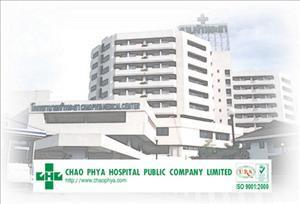
The Chaophya Hospital is a JCI accredited, tertiary private hospital in Bangkok, Thailand, which has been in operation since 1991. It has an international department which offers a comprehensive range of supporting services to foreign patients.
This general hospital in Bangkok offers a full range of services including Cosmetic Surgery. It has been accredited by the Hospital Accreditation Thailand and has been serving patients for more than 70 years.
DoctorsNTDr. Navarat ThongthaiPPDr. Phanuvich PumhirunView all 5
Being established in 1993, this tertiary private medical institution offers a wide range of medical care services. It has 350 in-patient bed capacity and is accredited by the Hospital Accreditation of Thailand.
DoctorsBPDr. Banjong PusapanichCADr. Chalermpong AriyadejView all 7
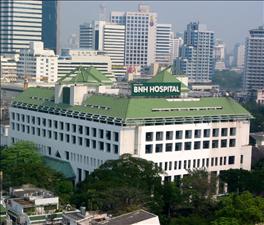
This secondary health care facility is a part of the Bangkok Hospital Group. It is located in Koh Samui. It has a 50 in-patient bed capacity and serves locals and international patients alike.
What is Tonsillectomy?
Tonsillectomy is a surgical procedure to remove the tonsils. It is often performed along with adenoidectomy, which is a surgical procedure to remove the adenoid glands. Tonsillectomy helps in removing recurrent throat infections. It lessens severe throat infections for a minimum of two years.
How is Tonsillectomy performed?
A small tool is inserted into the mouth to keep it open.
The tongue is depressed to view the throat.
The tonsils are then removed with a surgical instrument.
The cuts do not require stitches.
How to prepare for Tonsillectomy?
Any bleeding disorder should be controlled before the surgery.
If the patient has acute tonsillitis, it should be treated before tonsillectomy. Tonsillectomy may be postponed for three to four weeks in case of treatment.
The patient will go though a complete physical examination.
The patient will need to do some blood tests.
The doctor should be informed about any medication that the patient is taking, including herbs and vitamins.
The patient will be asked to take certain medication about 10 days before surgery.
If the patient needs to take medication, it can be taken with a small amount of water
About Tonsillectomy
Key facts to plan your treatment: how long it takes, your hospital stay, anaesthesia, risks and recovery.
Days admitted
Tonsillectomy is usually done as an outpatient procedure. On rare occasions children may be kept overnight in the hospital for observation.
Anesthesia
General Anesthesia. Sometimes adults may be given local anesthesia.
Recovery
- The patient is taken to the recovery room and kept there until the effects of anesthesia wears off. - The patient’s vital signs are monitored. - The patient is made to lie down on the side to avoid any chance of aspiration of blood into the lungs. - A complete recovery will take approximately one to two weeks. - The patient will be affected with a sore throat for several days. - White scab will form in the throat for five to 10 days after the surgery.
Risks
- Bleeding - Infection - Injury to the uvula - Nasal sounding voice - Risks of anesthesia such as adverse reaction to medication and breathing difficulty
After care
- The patient should stay away from sick people to avoid chances of infection. - Antibiotics and pain medication should be taken to relieve sore throat. - The patient should take liquid food or food that is soft for 24 hours after the surgery. - The patient should avoid strenuous physical activities for about 10 days. - The doctor should be informed if the patient has bleeding, earache or fever for more than three days.

 Private Hospital
 JCI
 Thai HA
 ISO