Skip to hospitals

Dialysis care in Thailand

Peritoneal Dialysis in Thailand

Hospitals and medical centers in Thailand performing Peritoneal Dialysis.
✓ Listed hospitals✓ Free consultation✓ No obligation
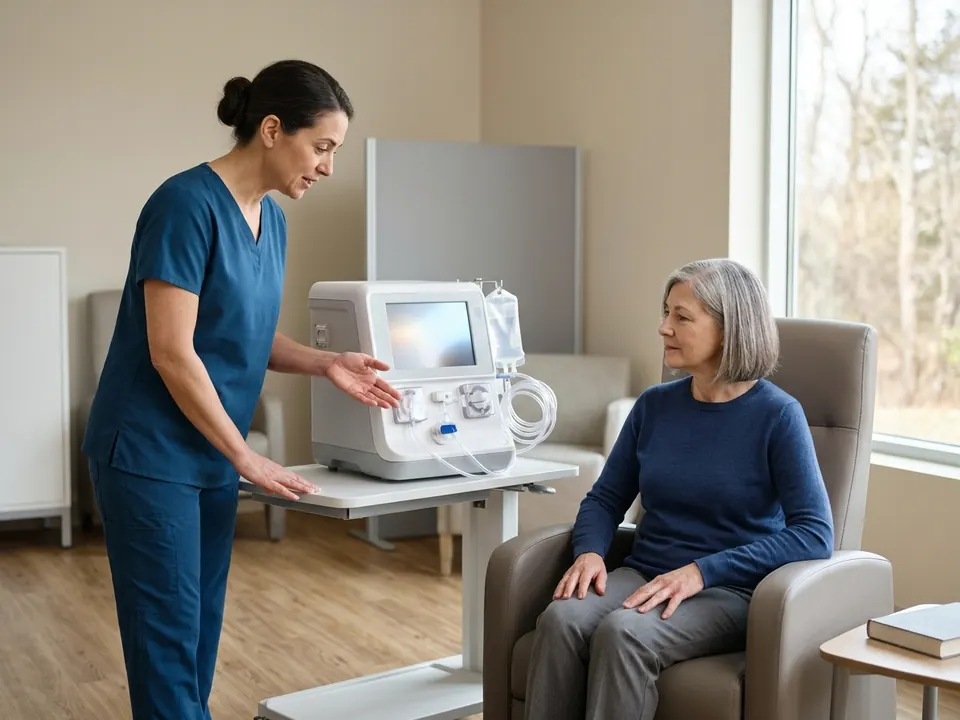
A nurse instructing a patient on using peritoneal dialysis equipment in a clinic room.

Trusted by

  • +22 millionusers
  • +238,000patients assisted
  • +2,310medical centers
  • +18years of experience in medical tourism

At a glance

Key planning information for peritoneal dialysis in Thailand.

2 hospitalsList peritoneal dialysis

Peritoneal Dialysis in Thailand is priced per case at 2 hospitals. Each hospital quotes its own price for your case.

Hospitals and clinics offering Peritoneal Dialysis in Thailand

Peritoneal Dialysis is listed by 2 hospitals in Thailand. The order reshuffles every hour so each gets equal exposure.

Showing 1–2 of 2 hospitals
Mission Hospital — photoPrivate Hospital
Bangkok, Thailand
Thai Hospital Accreditation (HA) markThai HAPrice on request

This general hospital in Bangkok offers a full range of services including Cosmetic Surgery. It has been accredited by the Hospital Accreditation Thailand and has been serving patients for more than 70 years.

PricesPeritoneal Dialysis upon request
Price
Contact for quote

Description of Peritoneal Dialysis:

What is Peritoneal Dialysis?
Peritoneal dialysis is a medical procedure to treat severe chronic kidney disease. The peritoneum inside the abdomen is used as a membrane through which fluids and other substances in the blood like urea, glucose, electrolytes, albumin, etc, are exchanged.

About Peritoneal Dialysis

Key facts to plan your treatment: how long it takes, your hospital stay, anaesthesia, risks and recovery.

Recovery
- The surgical dressing is changed once a week for 2 to 4 weeks unless there is drainage.
- Dressing changes are done daily once the exit site of the catheter is healed.
- The patient may experience bruising and discomfort after the access is placed for about one to two weeks.
Risks
- Infection around the catheter site
- Peritonitis, i.e. infection in the lining of the abdominal wall
- Severe pain in the rectum or perineum due to problems with the catheter
- Mild back pain and bloating of the abdomen during the procedure
- Encapsulating peritoneal sclerosis, caused by a thick layer of fibrin inside the peritoneum that obstructs bowels
After care
- The access should be cleaned and monitored daily.
- Drainage, swelling or redness around the access site may indicate infection.
- Scabs that occur at the exit site should never be picked or removed.
- The catheter should be regularly checked for cracks as it may lead to infection.
- The end of the catheter should be secured to the skin or dressing to avoid any tugging and tension.
- The patient should not swim before the exit site is healed.
- Using hot tubs should be avoided.
- The patient should consult the doctor about using any cream or powder around the exit site, and taking showers.
- The patient should report any pain or infection symptoms to the doctor.

Patient reviews

Reviews coming soon.

Common questions

Frequently asked questions

Have a question? Get a free consultation.

Ready to compare peritoneal dialysis hospitals in Thailand?

Choose a hospital and send your enquiry to its international patient team. Each replies with its own price and plan.

Free consultation • No obligation

Browse Thailand dialysis centers by procedure 1