What JCI, Thai HA, MSQH, NABH and CSG check, how long each lasts, and how to verify a hospital on the official register before you book treatment abroad.
5 accreditation bodies5 official registersJCI in 70+ countriesValid 3–4 years85 hospitals
1,000+JCI-accredited and certified organisations in over 70 countries · JCI
JCIThai HAMSQHNABHCSGOne international and four national bodies explained on this page
3–4 yearsHow long hospital accreditation lasts before a full re-survey
Summary
In short: Hospital accreditation means an independent body has surveyed a hospital's systems — patient safety, infection control, medication, staff and facilities — against published standards. JCI (Joint Commission International) is the main international accreditor, with more than 1,000 accredited and certified organisations in over 70 countries. Thailand (HA), Malaysia (MSQH), India (NABH) and Mexico (CSG) run national programmes. Accreditation lasts three to four years, so always confirm it on the accrediting body's own register — and remember it rates systems, not individual surgeons.
Figures dated to each body's own publication; counts change as hospitals are accredited or expire
Key takeaways
JCI accredits hospitals for three years against its 8th-edition standards, in force since 1 January 2025, and awards the Gold Seal of Approval.
Thailand's HA, run by the Healthcare Accreditation Institute, lasts three or four years; Advanced HA is the top level.
Malaysia's MSQH grants four-year accreditation; about 180 hospitals were on its list in September 2026.
India's NABH accredits hospitals for four years under its 6th-edition standards, in force since January 2025.
Mexico's CSG certification moved to a new model, MOCEBPASS, in September 2025; certificates last three years.
Verify on the official register, check the expiry date and what is covered, then check your surgeon.
What hospital accreditation checks — and what it does not
Every hospital needs a licence from its government to operate. Accreditation is different: it is usually voluntary, it is done by an independent body, and it measures the hospital against standards set above the legal minimum. Surveyors visit, interview staff, follow real patients through their care and review records. If the hospital meets the standards it is accredited for a fixed period, then surveyed again.
Accrediting bodies are themselves checked. The ISQua External Evaluation Association (IEEA) accredits the accreditors — their standards, their organisation and the training of their surveyors. JCI, Thailand's HAI, MSQH and NABH have all held ISQua accreditation, which is one reason a national accreditation can be as meaningful as an international one.
What surveyors check
Patient identification and safe surgery checks
Infection prevention and control
Medication safety, from prescribing to giving
Staff qualifications, credentials and training
Building, fire, equipment and emergency safety
Quality measurement and incident reporting
Patient rights, consent and information
What accreditation does not tell you
An individual surgeon's skill or results
Price, value or how quickly you are seen
Every specialty — programme certificates are separate
That standards are met every day between surveys
Your travel, accommodation or aftercare at home
The five accreditations compared
One international body and four national ones cover most hospitals that treat medical tourists in Asia and Latin America. The table puts the facts side by side; each row links to its full explanation below and to the body's own register.
Counts are not comparable between bodies: JCI counts organisations worldwide, NABH counts every programme it runs, and MSQH and CSG count hospitals on their current lists. CSG: no current ISQua accreditation found.
International · worldwide
JCI accreditation
Joint Commission International · Gold Seal of Approval®
1994JCI founded; first hospital accredited in 1999
1,000+organisations in over 70 countries
3 yearsthen a full re-survey
8th ed.hospital standards since 1 Jan 2025
JCI is the not-for-profit international affiliate of The Joint Commission, which accredits hospitals in the United States. JCI was formed in 1994 and accredited its first hospital in December 1999: Hospital Israelita Albert Einstein in São Paulo, Brazil.
JCI reports more than 1,000 accredited and certified organisations in over 70 countries. Besides hospitals and academic medical centers it accredits clinical laboratories, ambulatory and primary care, long-term care, home care and medical transport. Hospitals that pass receive the Gold Seal of Approval®, and only hospitals with current accreditation may display it.
Hospitals are surveyed against the 8th edition of JCI's hospital standards, in force since 1 January 2025. It added chapters on health care technology — electronic records, telehealth and cybersecurity — and on global health impact, which covers sustainability, while cutting the number of standards by about 10–15%.
What JCI surveys
IPSGInternational Patient Safety Goals
ACCAccess to care and continuity of care
AOPAssessment of patients
ASCAnesthesia and surgical care
COPCare of patients
MMUMedication management and use
PCCPatient-centered care
PCIPrevention and control of infections
QPSQuality and patient safety
GLDGovernance, leadership and direction
FMSFacility management and safety
SQEStaff qualifications and education
MOIManagement of information
HCTHealth care technology
GHIGlobal health impact
Academic medical centers are also surveyed on research (HRP) and medical education (MPE). Source: JCI 8th-edition table of contents.
Reduce the risk of health care-associated infections
Reduce the risk of patient harm from falls
How a hospital earns it
1
Apply
Online, 6–12 months ahead. The hospital must be licensed, fully operating and providing acute care 24/7.
2
Prepare
JCI reviews six months of the hospital's evidence before the survey date.
3
Survey
On-site, virtual or hybrid. Surveyors follow real patients through their care: the tracer method.
4
Decision
JCI's Accreditation Committee decides. Findings are rated by how likely they are to cause harm.
5
Every 3 years
A full re-survey, with non-scored check-in sessions in between.
JCI also certifies single clinical programmes, such as stroke, joint replacement, cancer or transplant care, through Clinical Care Program Certification, which requires JCI accreditation first. In July 2026 it added Center of Excellence certification for pediatrics, oncology, trauma, orthopedics and maternal-perinatal care. Read the re-survey cycle in JCI's own guide to accreditation.
Look for the date, not the logo.A hospital website can keep showing an old Gold Seal. Search the hospital on JCI's register and check that its accreditation is current.
1997HA programme began; public organisation since 2009
949+public and private hospitals certified (2023)
3–4 yearsdepending on the survey score
6th ed.standards, ISQua-accredited to 2030
HA is Thailand's national hospital accreditation. It is run by the Healthcare Accreditation Institute (Public Organization), known as HAI and formerly the Institute of Hospital Quality Improvement & Accreditation, the name some hospitals still use. The programme began in 1997, became an institute in 1999 and a public organisation by Royal Decree in 2009. HAI says it has certified more than 949 public and private hospitals.
HA works in steps. Step 1 and Step 2 are development stages, valid for one and two years. Step 3 is full, Standard Level HA, valid for three or four years depending on the survey score. Hospitals that already hold it can apply for Advanced HA (A-HA), the highest level.
Since 2026 hospitals have been assessed against HAI's Hospital and Healthcare Standards, 6th Edition, which add digital tools and AI, sustainability and safety. ISQua's evaluation body accredited the edition in January 2026, until 2030, and HAI says it is one of 18 organisations worldwide accredited in all three ISQua areas: organisation, standards and surveyor training.
From first step to Advanced HA
1
Step 1
Development stage: risk and quality systems in place. Valid one year.
2
Step 2
Development stage: quality improvement under way. Valid two years.
3
HA
Standard Level HA, full accreditation. Valid three or four years.
4
Advanced HA
For hospitals already holding HA: the highest level.
What the standards cover
Part IOrganisation management
Part IIKey hospital systems
Part IIIPatient care process
Part IVResults
Structure of the 5th Edition (2022). HAI also awards three-year Program and Disease Specific Certification (PDSC) — for example for heart attack or cancer care — to hospitals at Step 2 or above.
Many private hospitals that treat international patients hold both HA and JCI. Bumrungrad International, for example, has held HA since 1999 — the first private hospital to receive it — and in 2002 became Asia's first JCI-accredited hospital. Thailand had 63 JCI-accredited medical institutions in February 2025.
Check the level and the end date.HAI's register lists each certificate with its level — Step, HA or Advanced HA — and its dates. Some English entries are incomplete, so try the Thai name if a hospital does not appear.
MSQH is Malaysia's national body for accrediting hospitals and other healthcare facilities. It is a not-for-profit society, set up in 1997 by the Ministry of Health with the Association of Private Hospitals of Malaysia and the Malaysian Medical Association, and the Ministry recognises it as the national accreditation body. Accreditation is voluntary and separate from the licence a hospital needs to operate.
The official list showed about 180 accredited hospitals on 30 September 2026, roughly 100 public and 80 private. MSQH has published 7th Edition hospital standards, which cover core areas across the hospital plus individual clinical, diagnostic and support services. ISQua has certified MSQH as an organisation, and its surveyor training, for 2024–2028.
The hospital substantially complies with the standards, including every core and safety standard.
2
Delayed: one year
Most standards are met but safety issues remain. A focus survey follows within 12 months.
3
Non-accreditation
A significant number of standards are not met. The hospital waits at least 12 months to be surveyed again.
What the standards cover
CoreGovernance and leadership
CoreSafety and environment
CoreFacilities and equipment
CoreNursing and infection control
CorePatient rights
CoreHealth records and digital care
ServiceEmergency, surgery and critical care
ServiceCardiology and cancer
ServiceDialysis, radiology and laboratory
ServicePharmacy, rehabilitation and organ donation
Safety requirements are not negotiable: a hospital that fails them is not accredited, even if it meets everything else.
Use find-on-page.MSQH's list has no search box. Open it, search for the hospital's name in your browser and check the end date — a few listed periods have already expired.
NABH runs more than 30 accreditation, certification and empanelment programmes and says over 29,000 facilities are accredited or certified across them (May 2026). Full hospital accreditation is the top level; Entry-Level certification, valid two years, is a stepping stone for hospitals and small healthcare organisations of up to 50 beds.
Online application with a self-assessment and fee, then a desk review by NABH.
2
Pre-assessment
An optional visit to find gaps before the final assessment.
3
Final assessment
Assessors survey the hospital on site against every chapter.
4
Decision
The hospital closes any non-conformities; the Accreditation Committee decides.
5
Surveillance
A visit at 21–24 months; renewal applications six months before expiry.
NABH also empanels Medical Value Travel Facilitators (MVTF) — agencies that arrange treatment in India for international patients. Second-edition MVTF standards have applied since 1 January 2025, and empanelment lasts two years.
Accredited, or entry-level?Both appear in NABH's search. Open the certificate: full accreditation runs four years; an Entry-Level certificate runs two.
In Mexico, hospital certification is granted by the CSG, the General Health Council: a constitutional body that reports directly to the President, with the Secretary of Health presiding. Certification began in 1999, and the CSG took over the evaluations in 2002.
Mexico created a national certification system, SiNaCEAM, in 2008 and in 2009 aligned its hospital standards with JCI's under an agreement with Joint Commission International. That model was replaced in 2023, and again in September 2025 by the current one: MOCEBPASS (Modelo de Certificación y Estandarización de Buenas Prácticas en Atención de Servicios de Salud). Its hospital manual has 273 standards, basic and advanced levels and an annual follow-up, and hospitals apply through the CSG's SIMOCE platform, which opened in April 2026.
Certification is voluntary and a certificate lasts three years. Few hospitals hold it: the CSG list updated in June 2026 showed about 30 certified hospitals — 21 private, 8 public and 1 social — as reported in the Mexican press. Mexico also had about six JCI-accredited hospitals in 2024. The 2009 JCI alignment applied to the earlier standards; no source describes the 2025 model as JCI-aligned.
How a hospital is certified under MOCEBPASS
1
Register
The hospital registers on SIMOCE and receives a case number.
2
Validation
A regulatory check gives a participation certificate, valid one year.
3
Evaluation
The hospital is evaluated against the hospital manual.
4
Ruling
A favourable ruling gives the certificate of compliance, valid three years.
5
Follow-up
Annual follow-up keeps the certificate in force.
Old certificates still circulate.Hospitals certified under Mexico's earlier models may still show them online. Check the hospital on the CSG's current list of certified establishments and its expiry date.
Hospital websites often show several badges side by side. Only some of them are hospital accreditations. When a seal is unfamiliar, ask who issued it, what was assessed and where the register is.
ISO 9001International Organization for Standardization
Certifies a quality-management system: that processes are documented, followed and audited. It is not specific to healthcare and does not measure clinical outcomes.
TEMOSInternational patient services
Certification focused on services for international patients: coordination, interpreters, transfers and follow-up. Useful alongside a hospital accreditation, not instead of one.
ACHS InternationalAustralian Council on Healthcare Standards
An Australian accreditor that also works abroad. Some Malaysian hospitals hold ACHS instead of, or as well as, MSQH or JCI.
Tourism and marketing sealsDestination awards and badges
Seals from tourism ministries or travel promoters — such as Mexico's health-tourism distinction — recognise visitor services. They are not clinical accreditation.
How to verify a hospital's accreditation
A logo on a website, or a certificate image sent by email, proves nothing on its own. Accreditation expires and can be withdrawn, and some hospitals show seals they no longer hold. Choose where you plan to be treated to see which registers to check, then work through the five checks before you book.
Verification checker
Official registers only · opens the accrediting body's own site
JCIJoint Commission InternationalInternational · any countryJCI register
Check the level on HAI's register: Step 1 and Step 2 are development stages, not full accreditation. Many Thai private hospitals also hold JCI.
A valid record shows
The hospital's legal name and address — or the campus treating you
The level: full accreditation, not an entry or development step
Valid-from and valid-to dates covering your treatment
A certificate or record number you can quote back to the hospital
Five checks before you book
0 of 5 checks done
All five done. Ask accredited hospitals for a plan and price.Get Quote
Hospitals
Accredited hospitals on Health-Tourism.com
Hospitals that treat international patients, with the accreditations listed on their profiles. Confirm any of them on the official register with the checker above.
85 hospitals in 15 countries
Verified badges were found current on the accrediting body's register; the others are as each hospital lists them.
An independent body surveys a hospital's systems — patient safety, infection control, medication, staff and facilities — against published standards. Hospitals that meet them are accredited for a fixed period, usually three or four years, and are then surveyed again.
What does JCI accreditation mean?
Joint Commission International, the international arm of the US Joint Commission, has surveyed the whole hospital against its standards (8th edition since January 2025). Accredited hospitals receive the Gold Seal of Approval and must be re-surveyed every three years.
Is JCI better than a national accreditation?
Not necessarily. JCI uses the same standards worldwide, which helps comparison between countries. National bodies such as Thai HA, MSQH and NABH write standards for their own health systems, and several are accredited by ISQua. Many hospitals treating international patients hold both.
How long does hospital accreditation last?
JCI: three years. Thai HA: three or four years, depending on the survey score. MSQH: four years, or one year if delayed. NABH: four years, with a surveillance visit at about two years. Mexico's CSG: three years under the 2025 model.
How can I check that a hospital is really accredited?
Search the hospital on the accrediting body's own register — the links are on this page — then check the expiry date and that the hospital treating you is named. Do not rely on a logo or a certificate image on the hospital's website.
Does accreditation guarantee a good result?
No. It shows the hospital's systems met a standard when it was surveyed. It does not rate individual surgeons, so also check your doctor's registration, experience with your procedure and, where available, published outcomes.
What is ISQua?
The International Society for Quality in Health Care. Its External Evaluation Association (IEEA) accredits the accreditors: their standards, organisation and surveyor training. JCI, Thailand's HAI, MSQH and NABH have all held ISQua accreditation.
What changed with CSG certification in Mexico?
Mexico's General Health Council replaced its certification system in 2023 and again in September 2025. The current model, MOCEBPASS, is voluntary and certificates last three years. Check the hospital on the CSG's current list of certified establishments.
Is Health-Tourism.com free for patients?
Yes. Patients compare accredited hospitals and request quotes free, with no obligation. Hospitals reply directly with a treatment plan and price, usually within 48 hours.
EvidenceInformation sources46 sources linked on this page · accrediting bodies' own publications first · checked 21 Oct 2026
[3]HAI abstract for ISQua 2023 backend.ha.or.th/fileupload/DOCUMENT/00187/e3efcc2a-e1bd-4ee7-bd9b-fa2947bf4dfc.pdf · cited for more than 949 hospitals certified
[6]AM: certified hospitals in Mexico (Aug 2026) www.am.com.mx/opinion/2026/08/15/hospitals-certificados-del-papel-a-la-realidad-1832554.html · cited for 30 hospitals on the June 2026 list
[8]JCI opens office in Riyadh (Mar 2023) jointcommissioninternational.org/resources/news/2023/03/joint-commission-international-opens-office-in-riyadh · cited for JCI founded 1994
[9]JCI marks ten years of global accreditation (Nov 2009) www.globenewswire.com/news-release/2009/11/16/1234995/0/en/Joint-Commission-International-Marks-Ten-Years-of-Global-Accreditation.html · cited for first accreditation, Dec 1999
[10]JCI: Accreditation programmes jointcommissioninternational.org/accreditation · cited for programmes, Gold Seal of Approval, ISQua IEEA
[15]JCI Guide to Accreditation: Sustain www.jointcommissioninternational.org/what-we-offer/accreditation/guide-to-accreditation/sustain · cited for re-accreditation every three years
[33]NABH: Implementation plan of 6th Edition standards portal.nabh.co/Announcement/Notification%20%E2%80%93%20Implementation%20Plan%20of%206th%20Edition%20Standards.pdf · cited for effective 1 Jan 2025
[45]Médica Sur: Annual report 2024 inversionistas.medicasur.com.mx/site/uploads/en/documents/annual_reports/medica_sur_informe_anual_2024.pdf · cited for about six JCI-accredited hospitals in Mexico
[46]JCI Guide to Accreditation: Act www.jointcommissioninternational.org/what-we-offer/accreditation/guide-to-accreditation/act · cited for application 6–12 months ahead; survey
Ready to compare accredited hospitals?
Send one enquiry. Accredited hospitals you choose reply with a personalised plan and price, usually within 48 hours.
HTPublished by Health-Tourism.com Posted 21 Oct 2026, 12:30 UTC · Last updated 22 Oct 2026, 07:26 UTC · Written by the Health-Tourism.com editorial team · Replaces the earlier JCI, Thai HA, MSQH, NABH and CSG pages
Cite this page
Health-Tourism.com. “Hospital accreditations.” Updated 22 Oct 2026. https://staging.health-tourism.com/hospital-accreditations/
About this page. Health-Tourism.com is an independent medical-tourism marketplace — not a hospital, clinic, medical agency or accrediting body — and does not give medical advice. This page explains accreditation; it is not a ranking of hospitals, and listing a hospital is not an endorsement. Accreditation status changes: the accrediting body's register is the only authoritative source. Figures are quoted from the linked sources and dated.
 JCI
 Thai HA
 MSQH
 NABH
 CSG

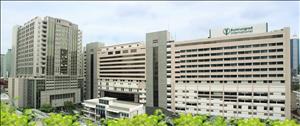 Bumrungrad Hospital
 Apollo Hospital Chennai
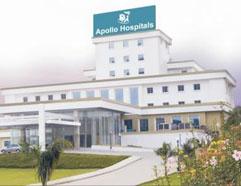 Apollo Hospitals Bangalore
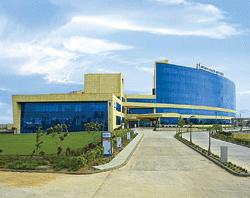 Artemis Health Institute
 Bangkok Hospital Pattaya
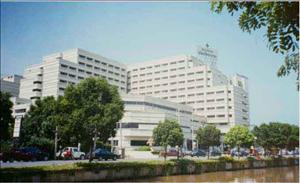 Chiangmai Ram Hospital
 Synphaet Hospital
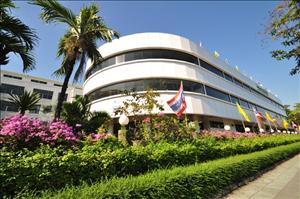 Mission Hospital
 Ampang Puteri Hospital
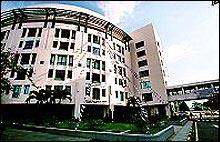 Gleneagles Intan Medical Centre
 Gleneagles Medical Centre Penang
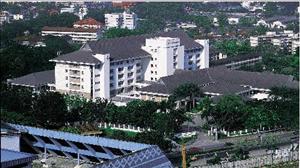 IJN - National Heart Institute
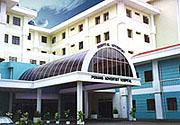 Penang Adventist Hospital
 KPJ Damansara Specialist Hospital
 Moolchand Medcity
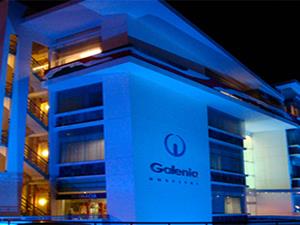 Galenia Hospital
 Centro Medico Puerta de Hierro
 San Angel Hospital